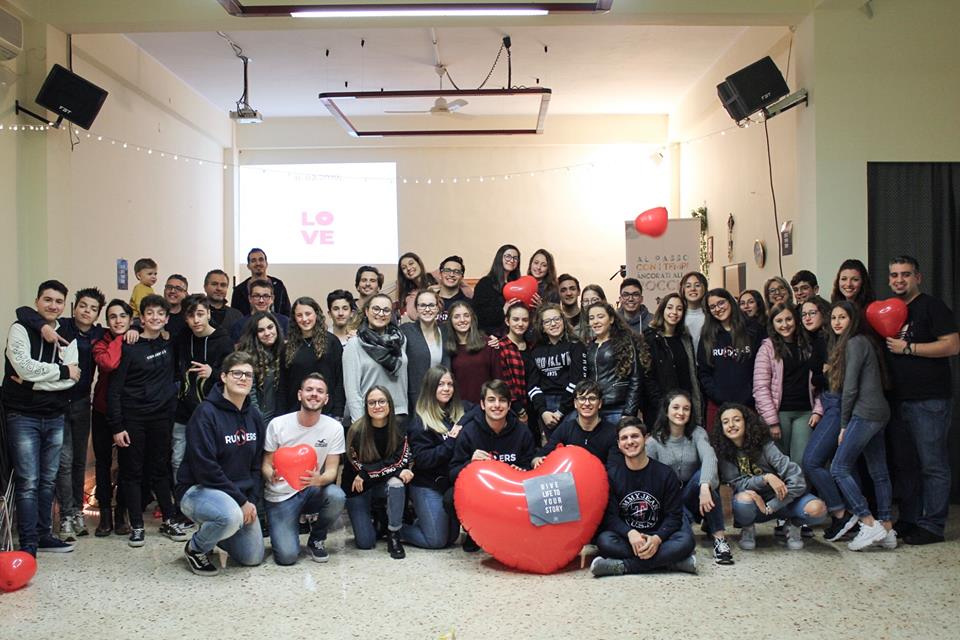
Because of you…
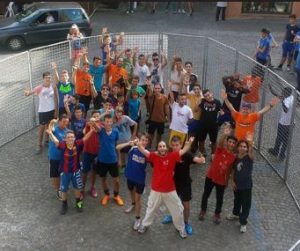
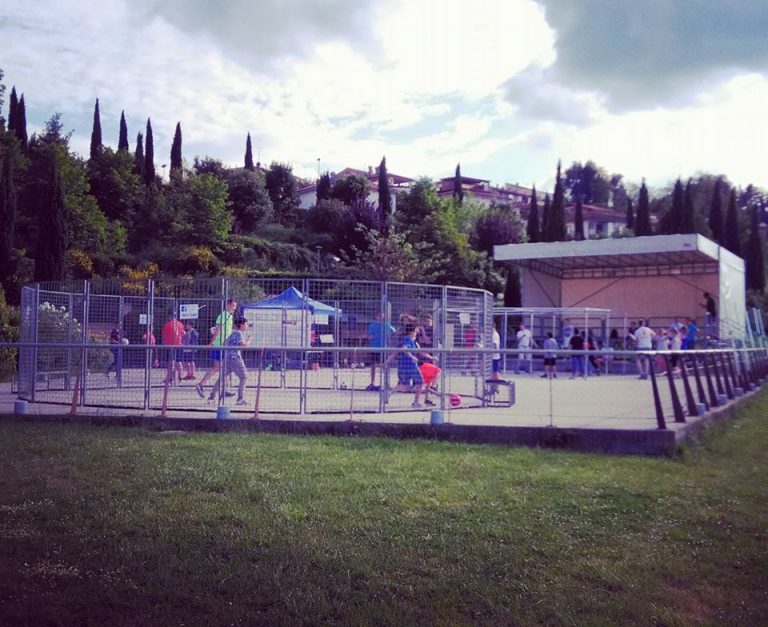
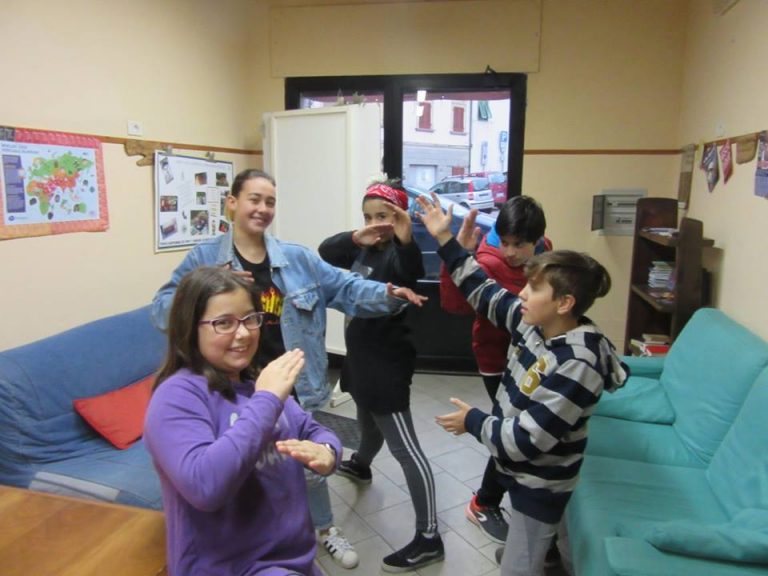
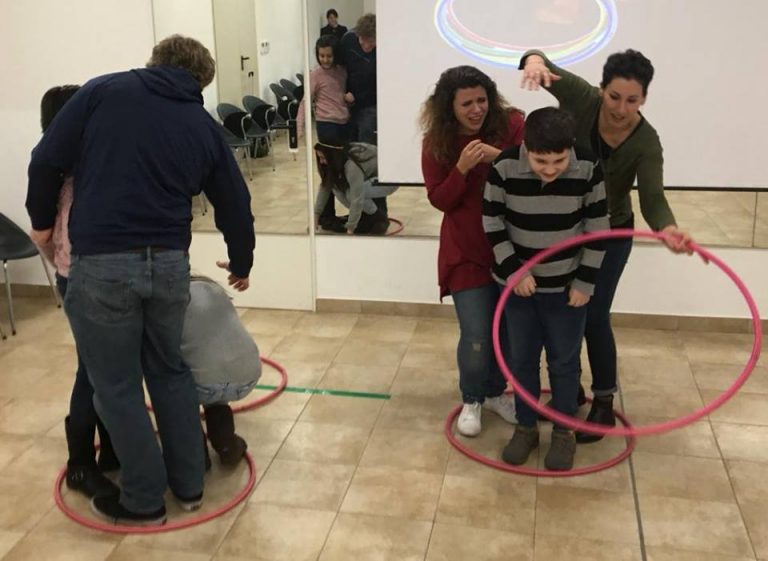
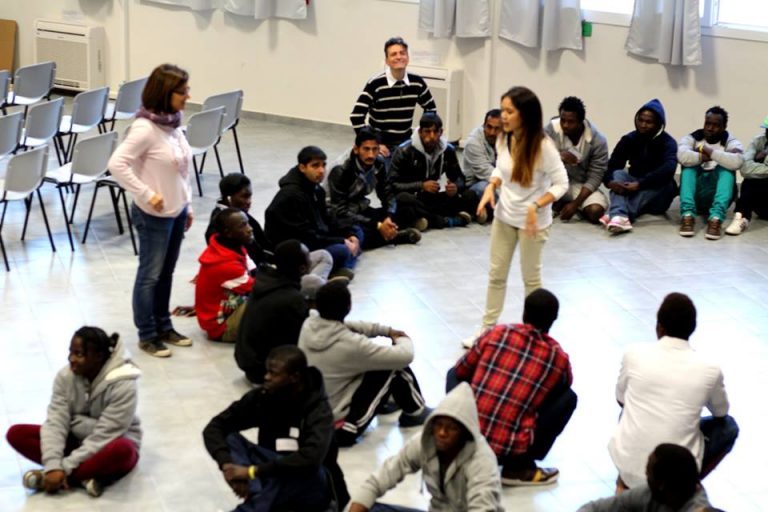
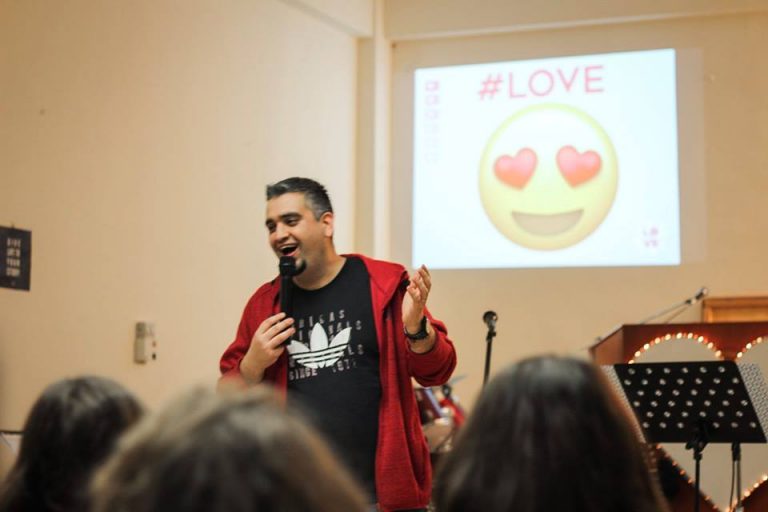
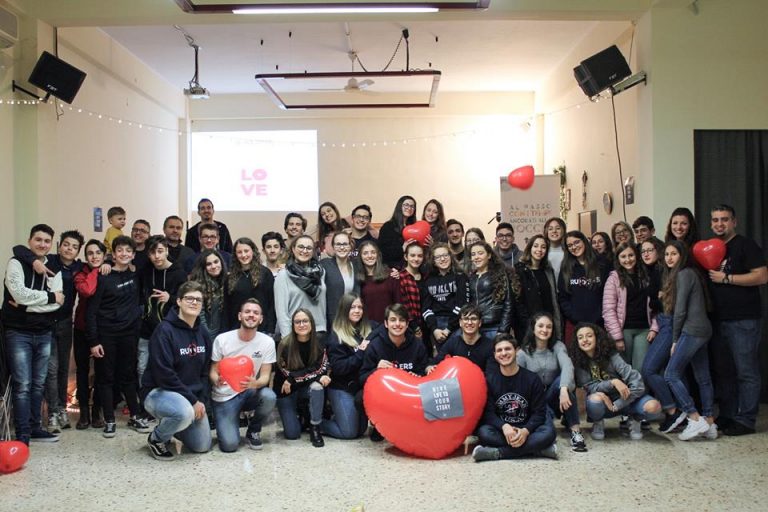
Young people in Italy are being reached using the following ministries:
- Drop in centers in Bologna and Palermo
- Schoolwork
- Summer camp
Prayer Needs
Please pray for our staff, Ester Montefalcone; Andrea and Sheila Crocivera; that we may be led by the Spirit in reaching out to lost young people in Italy, communicate the Gospel in a relevant way and that we may be vehicles of a renewal in the darkness of our land.
About Italy
Italy
Introduction
Italy became a nation-state in 1861 when the regional states of the peninsula, along with Sardinia and Sicily, were united under King Victor EMMANUEL II. An era of parliamentary government came to a close in the early 1920s when Benito MUSSOLINI established a Fascist dictatorship. His alliance with Nazi Germany led to Italy's defeat in World War II. A democratic republic replaced the monarchy in 1946 and economic revival followed. Italy was a charter member of NATO and the European Economic Community (EEC). It has been at the forefront of European economic and political unification, joining the Economic and Monetary Union in 1999. Persistent problems include illegal immigration, organized crime, corruption, high unemployment, sluggish economic growth, and the low incomes and technical standards of southern Italy compared with the prosperous north.
Geography
Location
Location: Southern Europe, a peninsula extending into the central Mediterranean Sea, northeast of Tunisia
Geographic Coordinates: 42 50 N, 12 50 E
Area
Total Area: 301,340 sq km Rank: 71
Land Area: 294,140 sq km
Water Area: 7,200 sq km
Note: includes Sardinia and Sicily
Comparison: slightly larger than Arizona
Land Boundaries: 1,899.2 km
Bordering Countries: Austria 430 km, France 488 km, Holy See (Vatican City) 3.2 km, San Marino 39 km, Slovenia 199 km, Switzerland 740 km
Coastline: 7,600 km
Climate
predominantly Mediterranean; Alpine in far north; hot, dry in south
Terrain
mostly rugged and mountainous; some plains, coastal lowlands
Elevations
Lowest Point: Mediterranean Sea 0 m
Highest Point: Mont Blanc (Monte Bianco) de Courmayeur 4,748 m (a secondary peak of Mont Blanc)
Natural Resources
coal, mercury, zinc, potash, marble, barite, asbestos, pumice, fluorspar, feldspar, pyrite (sulfur), natural gas and crude oil reserves, fish, arable land
Land Use
Arable land: 26.41%
Permanent Crops: 9.09%
Other: 64.5% (2005)
Irrigated Land: 27,500 sq km (2003)
Renewable Water Resources: 175 cu km (2005)
Total Freshwater withdrawal (domestic/industrial/agricultural): 41.98 cu km/yr (18%/37%/45%)
Freshwater Withdrawal Per Capita: 723 cu m/yr (1998)
Environment
Natural Hazards: regional risks include landslides, mudflows, avalanches, earthquakes, volcanic eruptions, flooding; land subsidence in Venice
Environmental Issues: air pollution from industrial emissions such as sulfur dioxide; coastal and inland rivers polluted from industrial and agricultural effluents; acid rain damaging lakes; inadequate industrial waste treatment and disposal facilities
Environmental Agreements: Party to: Air Pollution, Air Pollution-Nitrogen Oxides, Air Pollution-Persistent Organic Pollutants, Air Pollution-Sulfur 85, Air Pollution-Sulfur 94, Air Pollution-Volatile Organic Compounds, Antarctic-Environmental Protocol, Antarctic-Marine Living Resources, Antarctic Seals, Antarctic Treaty, Biodiversity, Climate Change, Climate Change-Kyoto Protocol, Desertification, Endangered Species, Environmental Modification, Hazardous Wastes, Law of the Sea, Marine Dumping, Ozone Layer Protection, Ship Pollution, Tropical Timber 83, Tropical Timber 94, Wetlands, Whaling
Geography Notes
strategic location dominating central Mediterranean as well as southern sea and air approaches to Western Europe
People
Population: 58,126,212 (July 2010 est.) Rank: 23
Age Structure
0-14 years: 13.5% (male 4,056,156/female 3,814,070)
15-64 years: 66.3% (male 19,530,696/female 18,981,084)
65 years and over: 20.2% (male 4,903,762/female 6,840,444) (2010 est.)
Median Age: 42.3 years
Population Growth
Growth Rate: -0.047% (2010 est.) Rank: 207
Birth Rate: 8.18 births/1,000 population (2010 est.) Rank: 221
Death Rate: 10.72 deaths/1,000 population (July 2010 est.) Rank: 50
Net Migration Rate: 2.06 migrant(s)/1,000 population (2010 est.) Rank: 41
Urbanization
Urban Population: 68% of total population (2008)
Rate of Urbanization: 0.4% annual rate of change (2005-10 est.)
Life and Death
Infant Mortality Rate: 5.51 deaths/1,000 live births Rank: 185
Life Expectancy at Birth: 80.2 years Rank: 18
Fertility Rate: 1.32 children born/woman (2010 est.) Rank: 206
Health and Disease
HIV/AIDS - Adult Prevalence Rate: 0.4% (2007 est.) Rank: 82
People living with HIV/AIDS: 150,000 (2007 est.) Rank: 36
HIV/AIDS Deaths: 1,900 (2007 est.) Rank: 62
Nationality and Culture
Noun: Italian(s)
Adjective: Italian
Ethnic Groups: Italian (includes small clusters of German-, French-, and Slovene-Italians in the north and Albanian-Italians and Greek-Italians in the south)
Religion: Roman Catholic 90% (approximately; about one-third practicing), other 10% (includes mature Protestant and Jewish communities and a growing Muslim immigrant community)
Languages: Italian (official), German (parts of Trentino-Alto Adige region are predominantly German speaking), French (small French-speaking minority in Valle d'Aosta region), Slovene (Slovene-speaking minority in the Trieste-Gorizia area)
Education
Literacy (Meaning, age 15 and over can read and write): 98.4% Male: 98.8% Female: 98% (2001 census)
School life expectancy (primary to tertiary education): 16 years Male: 16 years Female: 17 years (2006)
Education expenditures: 4.5% of GDP (2005) Rank: 89
Government
Country Name
Conventional Long Form: Italian Republic
Conventional Short Form: Italy
Local Long Form: Repubblica Italiana
Local Short Form: Italia
Formerly: Kingdom of Italy
Government Type: republic
Capital: Rome Geographic Coordinates: 41 54 N, 12 29 E
Administrative divisions
15 regions (regioni, singular - regione) and 5 autonomous regions (regioni autonome, singular - regione autonoma)
regions:
Abruzzo, Basilicata, Calabria, Campania, Emilia-Romagna, Lazio (Latium), Liguria, Lombardia, Marche, Molise, Piemonte (Piedmont), Puglia (Apulia), Toscana (Tuscany), Umbria, Veneto (Venetia)
autonomous regions:
Friuli-Venezia Giulia; Sardegna (Sardinia); Sicilia (Sicily); Trentino-Alto Adige (Trentino-South Tyrol) or Trentino-Suedtirol (German); Valle d'Aosta (Aosta Valley) or Vallee d'Aoste (French)
Independence: 17 March 1861 (Kingdom of Italy proclaimed; Italy was not finally unified until 1870)
National holiday: Republic Day, 2 June (1946)
Constitution: passed 11 December 1947, effective 1 January 1948; amended many times
Legal system: based on civil law system; appeals treated as new trials; judicial review under certain conditions in Constitutional Court; has not accepted compulsory ICJ jurisdiction
Suffrage: 18 years of age; universal (except in senatorial elections, where minimum age is 25)
Executive Branch
Chief of State: President Giorgio NAPOLITANO (since 15 May 2006)
Head of Government: Prime Minister Silvio BERLUSCONI (since 8 May 2008) note - in Italy the prime minister is referred to as the president of the Council of Ministers
Cabinet: Council of Ministers proposed by the prime minister and nominated by the president
Elections: president elected by an electoral college consisting of both houses of parliament and 58 regional representatives for a seven-year term (no term limits); election last held on 10 May 2006 (next to be held in May 2013); prime minister appointed by the president and confirmed by parliament
Election Results: Giorgio NAPOLITANO elected president on the fourth round of voting; electoral college vote - 543
Legislative Branch
bicameral Parliament or Parlamento consists of the Senate or Senato della Repubblica (315 seats; members elected by proportional vote with the winning coalition in each region receiving 55% of seats from that region; members to serve five-year terms; and up to 5 senators for life appointed by the president of the Republic) and the Chamber of Deputies or Camera dei Deputati (630 seats; members elected by popular vote with the winning national coalition receiving 54% of chamber seats; members to serve five-year terms); note - it has not been clarified if each president has the power to designate up to five senators or if five is the number of senators for life who might sit in the Senate
Elections: Senate - last held on 13-14 April 2008 (next to be held in April 2013); Chamber of Deputies - last held on 13-14 April 2008 (next to be held in April 2013)
Election Results: Senate - percent of vote by party - NA; seats by party - S. BERLUSCONI coalition 174 (PdL 147, LN 25, MpA 2), W. VELTRONI coalition 132 (PD 118, IdV 3), UdC 3, other 6; Chamber of Deputies - percent of vote by party - NA; seats by party - S. BERLUSCONI coalition 344 (PdL 276, LN 60, MpA 8), W. VELTRONI coalition 246 (PD 217, IdV 29), UdC 36, other 4
Judicial branch
Constitutional Court or Corte Costituzionale (composed of 15 judges: one-third appointed by the president, one-third elected by parliament, one-third elected by the ordinary and administrative Supreme Courts)
Silvio BERLUSCONI coalition: Lega Nord or LN [Umberto BOSSI]; Movement for Autonomy or MpA [Raffaele LOMBARDO]; People of Freedom or PdL [Silvio BERLUSCONI]
W. VELTRONI coalition:
Democratic Party or PD [Pier Luigi BERSANI]; Italy of Values or IdV [Antonio DI PIETRO]
other non-allied parties:
Union of the Center or UdC [Pier Ferdinando CASINI]
Political Pressure Groups and Leaders: manufacturers and merchants associations - Confcommercio; Confindustria; organized farm groups - Confcoltivatori; Confagricoltura; Roman Catholic Church; three major trade union confederations - Confederazione Generale Italiana del Lavoro or CGIL [Guglielmo EPIFANI] which is left wing; Confederazione Italiana dei Sindacati Lavoratori or CISL [Raffaele BONANNO], which is Roman Catholic centrist; Unione Italiana del Lavoro or UIL [Luigi ANGELETTI] which is lay centrist)
International Organization Participation: ADB (nonregional member), AfDB (nonregional member), Arctic Council (observer), Australia Group, BIS, BSEC (observer), CBSS (observer), CD, CDB, CE, CEI, CERN, EAPC, EBRD, EIB, EMU, ESA, EU, FAO, FATF, G-20, G-7, G-8, G-10, IADB, IAEA, IBRD, ICAO, ICC, ICCt, ICRM, IDA, IEA, IFAD, IFC, IFRCS, IHO, ILO, IMF, IMO, IMSO, Interpol, IOC, IOM, IPU, ISO, ITSO, ITU, ITUC, LAIA (observer), MIGA, MINURSO, NATO, NEA, NSG, OAS (observer), OECD, OPCW, OSCE, Paris Club, PCA, PIF (partner), Schengen Convention, SECI (observer), SICA (observer), UN, UNAMID, UNCTAD, UNESCO, UNHCR, UNIDO, UNIFIL, Union Latina, UNMOGIP, UNRWA, UNTSO, UNWTO, UPU, WCO, WFTU, WHO, WIPO, WMO, WTO, ZC
Flag Description: three equal vertical bands of green (hoist side), white, and red; design inspired by the French flag brought to Italy by Napoleon in 1797; colors are those of Milan (red and white) combined with the green uniform color of the Milanese civic guard
Note: similar to the flag of Mexico, which is longer, uses darker shades of red and green, and has its coat of arms centered on the white band; Ireland, which is longer and is green (hoist side), white, and orange; also similar to the flag of the Cote d'Ivoire, which has the colors reversed - orange (hoist side), white, and green
Economy
Economy Overview: Italy has a diversified industrial economy, which is divided into a developed industrial north, dominated by private companies, and a less-developed, welfare-dependent, agricultural south, with high unemployment. The Italian economy is driven in large part by the manufacture of high-quality consumer goods produced by small and medium-sized enterprises, many of them family owned. Italy also has a sizable underground economy, which by some estimates accounts for as much as 15% of GDP. These activities are most common within the agriculture, construction, and service sectors. Italy has moved slowly on implementing needed structural reforms, such as reducing graft, overhauling costly entitlement programs, and increasing employment opportunities for young workers, particularly women. These conditions will be exacerbated in the near-term by the global economic downturn, but in the longer-term Italy's low fertility rate and quota-driven immigration policies will increasingly strain its economy. The Italian government has struggled to limit government spending, but Italy's exceedingly high public debt remains above 115% of GDP, and its fiscal deficit - just 1.5% of GDP in 2007 - exceeded 5% in 2009 as the costs of servicing the country's debt rose. A tax amnesty program implemented in late 2009 to repatriate untaxed assets held abroad has netted the federal government more than $135 billion.
Gross Domestic Product
GDP (purchasing power parity): $1.739 trillion (2009 est.) Rank: 11
GDP - real growth rate: -5.1% (2009 est.) Rank: 186
GDP - per capita (PPP): $29,900 (2009 est.) Rank: 46
GDP - Composition by Sector: Agriculture: 1.8% Industry: 25% Services: 73.1% (2009 est.)
Labor Force
Labor Force: 24.97 million (2009 est.) Rank: 23
Labor force - by occupation: Agriculture: 4.2% Industry: 30.7% Services: 65.1% (2005)
Unemployment Rate: 7.7% (2009 est.) Rank: 78
Poverty
Population below poverty line: NA
NA (31 December 2008)
note:
this is the European Central Bank's rate on the marginal lending facility, which offers overnight credit to banks in the euro area
country comparison to the world: 12
$511.5 billion (31 December 2008 est.)
Transnational Issues
International Disputes: Italy's long coastline and developed economy entices tens of thousands of illegal immigrants from southeastern Europe and northern Africa
Want to know more? Show Full Profile
Explore YFC International
- EverYouth Drama Ministry » Evangelism Through Drama
- YFC Alumni Fellowship » Reconnect with old friends and the ministry of YFC.
- YFC Global Launch » Helping Young Leaders Achieve Their God-given Dreams!
- YFC University » Quality online courses on the Bible, Ministry, and the Christian Life.
- YFC Coaching » Assisting YFC Staff to grow and become more effective in bringing out the best in those around them.
- YFC World » STAFF ONLY